Why Every Clinic Needs a Comprehensive HIPAA Risk Assessment
In today’s rapidly digitizing healthcare environment, the security of patient health information (PHI) has never been more vital. For medical practices, the stakes go far beyond operational efficiency; they involve legal accountability, patient trust, and the financial survival of the clinic. At the heart of a robust security posture lies the HIPAA risk assessment—a mandatory requirement that serves as the blueprint for your clinic’s digital safety.
What is a HIPAA Risk Assessment?
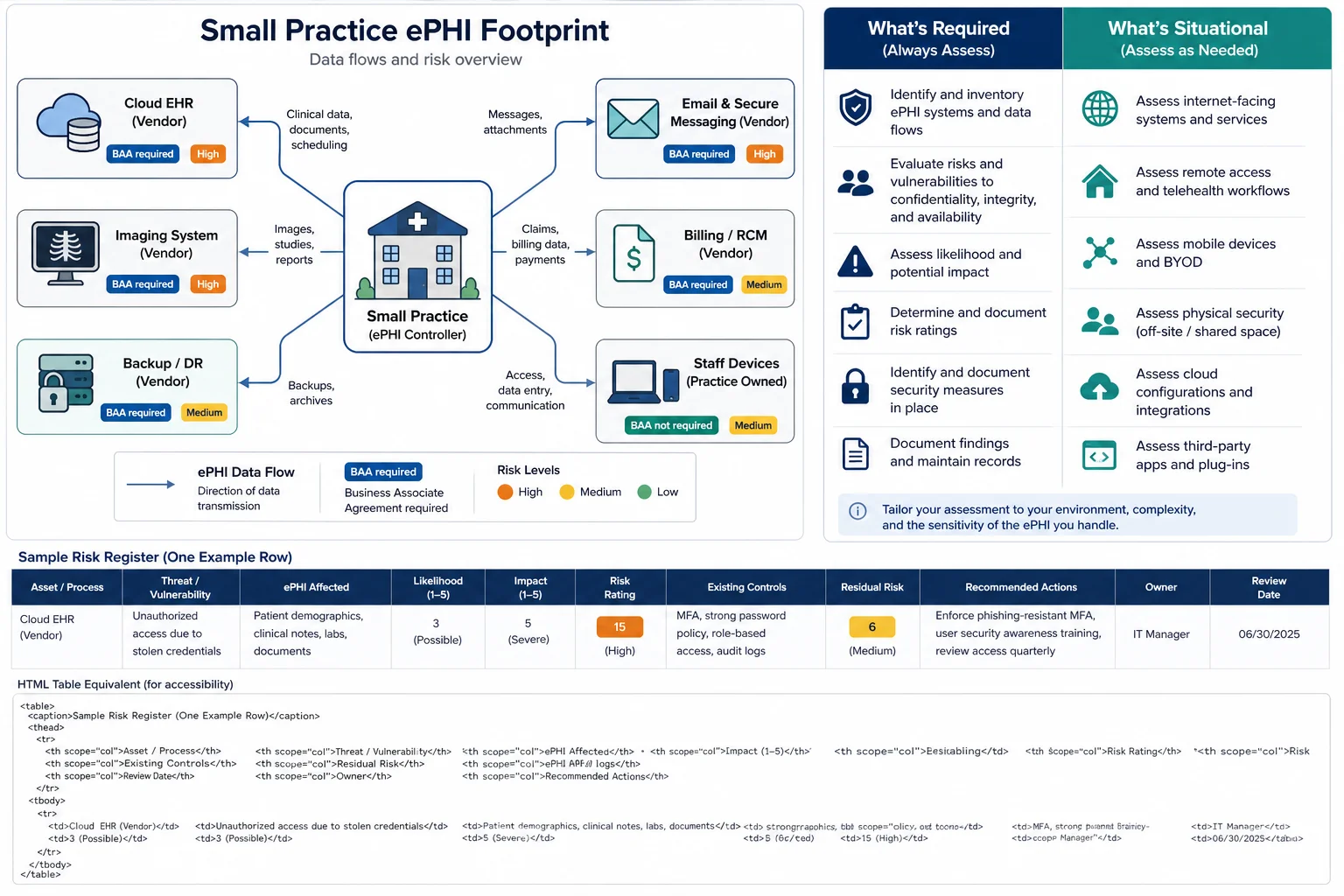
A HIPAA risk assessment is a systematic process that identifies, evaluates, and documents potential vulnerabilities to electronic protected health information (ePHI). It is not merely a box-ticking exercise for auditors; it is a diagnostic tool for your clinic’s cybersecurity. By analyzing your administrative, physical, and technical safeguards, you can pinpoint where data breaches are most likely to occur.
Why Medical Practices Cannot Ignore Compliance
Many clinic owners operate under the false assumption that their small size makes them invisible to hackers. In reality, smaller medical practices are often targeted precisely because their security defenses are frequently perceived as weaker than those of large hospital systems. Failure to perform a regular HIPAA risk assessment can lead to:
Secure your business and remote users
Get an All-In-One security stack, reduce lateral movement, and monitor every endpoint, fully managed for you. For just $1 per day.
Book a Meeting Now- Hefty fines from the Office for Civil Rights (OCR).
- Irreparable damage to your practice’s reputation.
- Significant downtime following a ransomware or phishing attack.
- Legal liability regarding patient confidentiality breaches.
The Core Pillars of a Successful Assessment
To conduct an effective HIPAA risk assessment, your practice must look at three distinct areas:
1. Administrative Safeguards
This involves reviewing your internal policies. Do you have a Business Associate Agreement (BAA) with every vendor that touches your data? Is your staff trained on identifying suspicious emails? Documentation is the first line of defense.
2. Physical Safeguards
It is not just about servers and software. Medical practices must also account for physical access. Are your file rooms locked? Are workstations positioned to prevent unauthorized screen viewing by patients or visitors?
3. Technical Safeguards
This is where most modern breaches occur. Encryption, secure network configurations, and robust access controls are essential. Your HIPAA risk assessment should verify that your firewalls are updated and your anti-virus software is actively scanning for emerging threats.
How to Get Started
If the process seems daunting, remember that you do not have to tackle it alone. Start by creating an inventory of all devices—laptops, tablets, and mobile phones—that access patient data. Engage with IT security professionals who understand the specific regulatory needs of medical practices. Remember, this is an ongoing process, not a one-time project. As your technology changes, your risk landscape shifts accordingly.
Conclusion: Turning Compliance into a Competitive Advantage
Prioritizing a HIPAA risk assessment demonstrates to your patients that their privacy is your top priority. When patients know their data is safe, their trust in your medical practices increases, leading to better patient retention and a stronger reputation in the community. Compliance is not just a hurdle; it is the foundation upon which high-quality, modern healthcare is built.