Midjourney vs. Hollywood: The AI Copyright Showdown and the Quest for Transparency
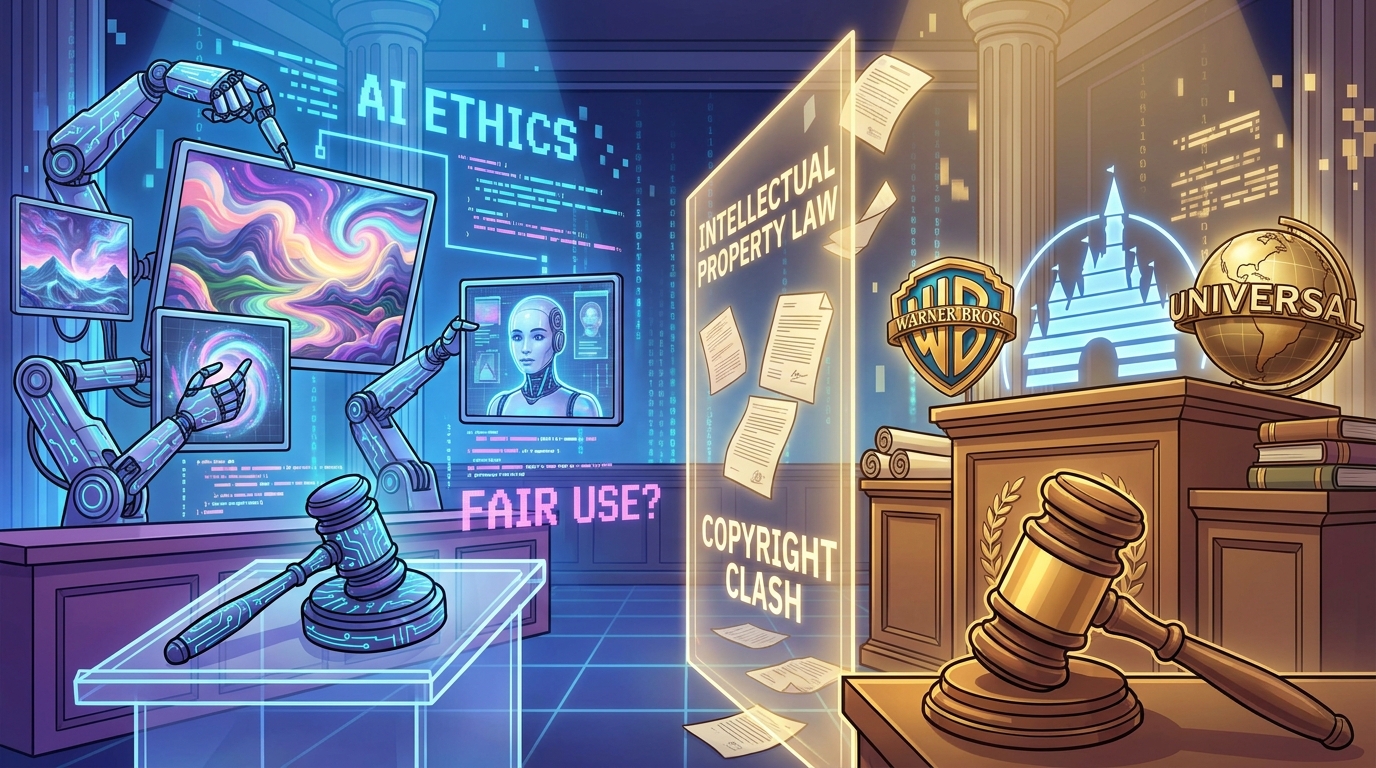
The intersection of artificial intelligence and intellectual property has ignited a complex legal battle between AI image generator Midjourney and some of Hollywood’s biggest players: Disney, Universal, and Warner Bros. At its core, the dispute centers on alleged copyright infringement, but it has recently taken a significant turn, with Midjourney pushing for the studios to reveal their own internal AI usage. This demand for transparency introduces a layer of complexity, hinting at potential hypocrisy and setting the stage for a precedent-setting case in the burgeoning era of generative AI.
The Genesis of the Conflict: Copyright Infringement Claims
The initial lawsuits brought by Disney, Universal, and Warner Bros against Midjourney last year were straightforward, at least on the surface. The studios accused Midjourney of copyright infringement, citing the AI’s ability to generate images of their iconic characters, such as Bart Simpson, Darth Vader, Superman, and Batman. These characters are protected intellectual property, and their unauthorized reproduction, even by an AI, is seen as a direct violation. The studios argue that Midjourney’s models were trained on vast datasets that included copyrighted material without permission, directly enabling the creation of derivative works that infringe on their rights.
Midjourney’s Defense: The Fair Use Argument
Midjourney’s primary defense hinges on the concept of fair use. In the United States, fair use allows for the limited use of copyrighted material without permission for purposes such as criticism, comment, news reporting, teaching, scholarship, or research. Midjourney contends that training its AI models on copyrighted images falls under this doctrine, arguing that the process is transformative. The AI doesn’t simply copy images; it learns patterns and styles to generate entirely new images, which it posits is a distinct enough transformation to qualify as fair use. This argument is a cornerstone of many AI companies facing similar legal challenges, suggesting that the training process itself, rather than the output, is what should be evaluated under fair use principles.
Secure your business and remote users
Get an All-In-One security stack, reduce lateral movement, and monitor every endpoint, fully managed for you. For just $1 per day.
Book a Meeting NowThe Counter-Offensive: Demanding Studio AI Transparency
The latest development sees Midjourney shifting its strategy from pure defense to an assertive demand for transparency. The AI startup is seeking to compel Disney, Universal, and Warner Bros to disclose the specifics of their own generative AI usage. Initially, a judge ruled that studios only needed to provide information about AI usage that resulted in “consumer-facing” videos and images. Midjourney is actively challenging this limitation, arguing that it unfairly restricts access to crucial evidence that could support its defense.
Why is this disclosure so important? Midjourney claims that by limiting the scope of discovery, the studios are engaging in a selective presentation of facts. The AI company believes that if these studios are using AI internally, trained on potentially unlicensed copyrighted content—even their own—for tasks like storyboarding, concept art, or internal ideation, it would establish an industry custom. Such a custom would significantly bolster Midjourney’s fair use defense, demonstrating that the practice of training AI on copyrighted material is not unique to them, and perhaps even widespread among the very entities suing them.
Unpacking Hollywood’s AI Adoption
Hollywood’s relationship with AI is complex and often contradictory. While studios are keen to protect their intellectual property, many are also actively exploring and investing in generative AI technologies for various aspects of production. These applications could range from early-stage concept development to background generation, digital asset creation, and even script analysis. If studios are indeed leveraging AI trained on their extensive libraries of films, shows, and character designs for internal creative processes, it creates a potential double standard. They would be prosecuting an external entity for a practice they might be engaging in themselves, albeit perhaps behind closed doors and for internal use.
This is where Midjourney’s argument about revealing all prompts and outputs from the studios’ AI usage, not just allegedly infringing ones, becomes critical. Such information could shed light on whether studios are applying a different standard to themselves than they expect from others, or if they are in fact grappling with the same murky legal waters surrounding AI training data and copyright.
The Nuances of Fair Use in Generative AI
The legal concept of fair use was established long before the advent of generative AI. Applying it to AI training data presents novel challenges. Key factors in determining fair use include:
- Purpose and Character of the Use: Is it commercial or non-profit educational? Is it transformative? Midjourney argues its use is transformative as it creates new expressions.
- Nature of the Copyrighted Work: Is it factual or creative? Creative works generally receive more protection.
- Amount and Substantiality of the Portion Used: How much of the copyrighted work was used? AI training involves ingesting vast quantities, but individual works might be a tiny fraction.
- Effect of the Use Upon the Potential Market for or Value of the Copyrighted Work: Does the AI-generated content replace or undermine the market for the original? Studios argue Midjourney outputs directly compete or diminish the value of their characters.
Midjourney’s assertion that internal studio AI use demonstrates