The Challenge of Cyberattack Attribution in Critical Infrastructure
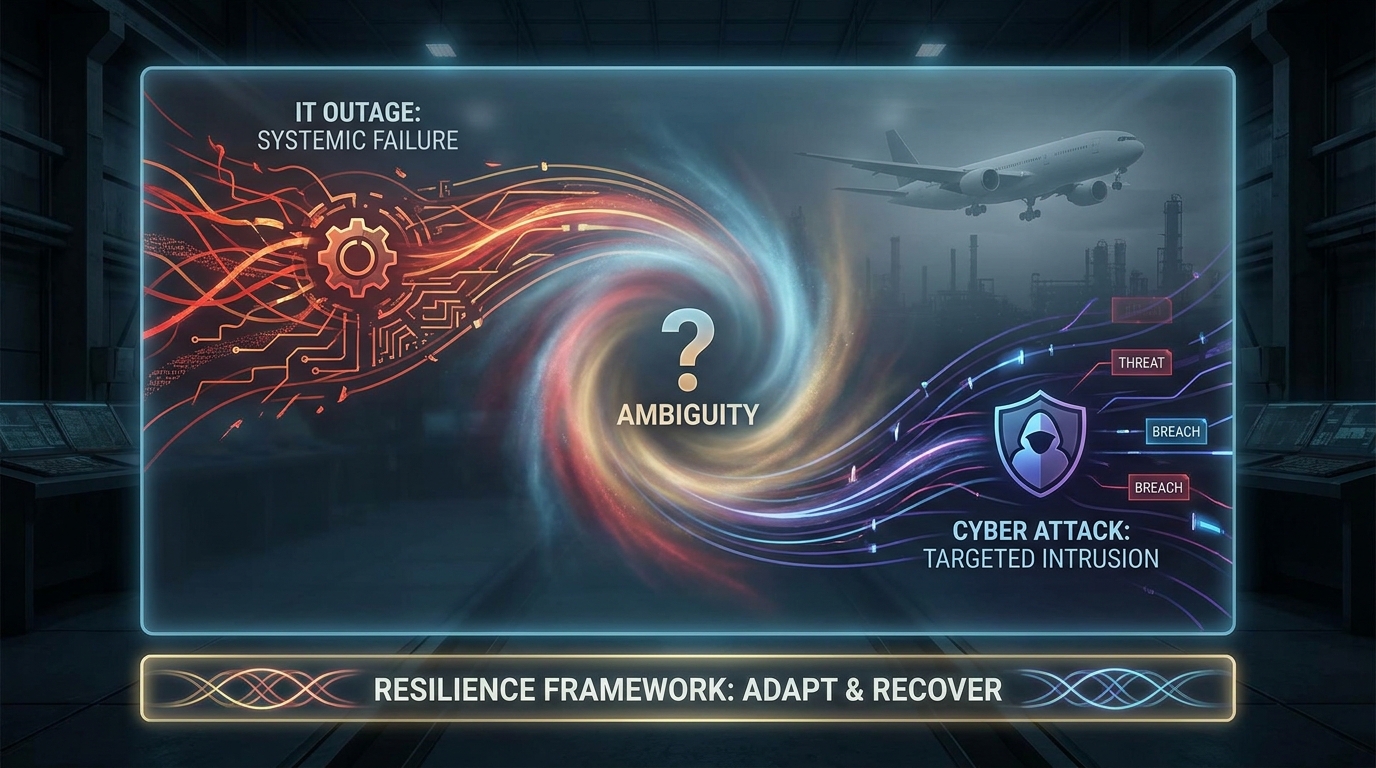
An IT outage recently impacted Boeing’s systems, leading to a company denial that a cyber attack was the cause. This event underscores a recurring challenge for technology leaders: accurately and quickly attributing the cause of significant system disruptions. In sectors like aerospace, where operational continuity is paramount, the distinction between an accidental outage and a malicious cyber attack carries profound implications for incident response, public perception, and long-term security strategy.
For organizations operating critical infrastructure, rapid and precise attribution is not merely a technical exercise; it influences financial reporting, regulatory compliance, legal actions, and national security responses. The initial denial by Boeing, citing no evidence of a cyber attack, highlights the careful communication required when such events occur, especially given the potential for speculative reporting.
Outage vs. Attack: The Initial Ambiguity
Distinguishing between a benign IT outage and a targeted cyber attack is often difficult in the immediate aftermath of an event. Both can manifest with similar symptoms: system unavailability, data access issues, and operational slowdowns. Technical teams face immense pressure to stabilize systems while simultaneously investigating the root cause.
Secure your business and remote users
Get an All-In-One security stack, reduce lateral movement, and monitor every endpoint, fully managed for you. For just $1 per day.
Book a Meeting Now- Operational Outages: These can stem from diverse factors such as software bugs, hardware failures, human error during configuration changes, or environmental issues like power fluctuations. A cascading failure in complex, interconnected systems can appear coordinated but be entirely accidental.
- Cyber Attacks: Indicators often include unauthorized access attempts, unusual network traffic patterns, evidence of malware execution (e.g., ransomware notes), data exfiltration, or exploitation of known vulnerabilities. However, sophisticated advanced persistent threats (APTs) can mimic legitimate activity, making detection challenging.
Forensic analysis, involving log reviews, network traffic analysis, and endpoint compromise assessment, is essential for accurate cyberattack attribution. This process is time-consuming and requires specialized expertise, often delaying definitive statements from affected organizations.
Strategic Impact and Enterprise Resilience
Regardless of the cause, any significant IT disruption in a major enterprise like Boeing can have substantial repercussions. For the aerospace industry, impacts extend beyond immediate operational bottlenecks:
- Production Delays: Disruptions to manufacturing lines, design software, or inventory management can halt or slow critical production, affecting delivery schedules and customer commitments.
- Supply Chain Ripple Effects: A disruption at a primary manufacturer cascades down to a vast network of suppliers and partners, impacting the entire ecosystem. This was exemplified by a previous incident involving a Boeing supplier, DCS Software Solutions, which was hit by ransomware.
- Reputational Damage: Even a non-malicious outage can erode customer and investor confidence if not managed with transparent and effective communication.
- Financial Loss: Lost productivity, recovery costs, and potential penalties for delayed deliveries contribute to significant financial burdens.
- National Security Concerns: For defense contractors like Boeing, any disruption, particularly a suspected cyber attack, immediately raises national security alarms, necessitating government involvement and scrutiny.
These potential impacts necessitate a focus on enterprise resilience – the ability of an organization to withstand, adapt to, and recover from disruptions. This goes beyond mere incident response to encompass proactive architectural decisions and continuous improvement.
Architecting for Advanced Cyber Defense and Operational Continuity
Tech leaders must champion strategies that build intrinsic resilience against both accidental outages and sophisticated cyber attacks:
1. Robust Incident Response Frameworks
A well-defined and frequently tested incident response plan is critical. This includes:
- Preparation: Comprehensive asset inventories, clear roles and responsibilities, established communication channels (internal and external), and pre-negotiated third-party forensic services.
- Identification: Advanced monitoring tools, security information and event management (SIEM) systems, and threat intelligence feeds to quickly detect anomalies.
- Containment and Eradication: Protocols for isolating affected systems, removing threats, and patching vulnerabilities.
- Recovery: Restoring systems and data from secure backups, prioritizing mission-critical functions, and verifying integrity.
- Post-Incident Analysis: Learning from every incident, refining procedures, and investing in continuous security enhancements.
2. Embracing Zero Trust Architecture
Shifting from perimeter-based security to a Zero Trust model assumes no user or device, inside or outside the network, should be trusted by default. This minimizes the impact of a breach by enforcing strict access controls and continuous verification, limiting lateral movement for attackers.
3. Enhanced Supply Chain Cybersecurity
As seen with the DCS Software Solutions incident, an organization’s security posture is only as strong as its weakest link. Strategies include:
- Vendor Risk Management: Thorough security assessments of all third-party vendors and partners.
- Contractual Obligations: Enforcing cybersecurity requirements and audit rights in vendor contracts.
- Software Bill of Materials (SBOMs): Requiring suppliers to provide SBOMs to understand software components and their associated vulnerabilities.
- Continuous Monitoring: Real-time monitoring of third-party security postures.
4. Redundancy, Backup, and Disaster Recovery
Implementing resilient infrastructure through geographical redundancy, diversified cloud providers, and immutable backups can significantly reduce recovery times and prevent data loss, irrespective of the disruption’s cause.
5. Security by Design and Automation
Integrating security considerations from the initial design phase of systems and applications. Leveraging automation for security tasks, such as patch management, vulnerability scanning, and response playbooks, reduces human error and accelerates defensive actions.
Leadership in an Evolving Threat Landscape
For tech leaders, navigating the complexities of IT disruptions requires more than technical proficiency; it demands strategic vision and proactive governance. Investing in skilled cybersecurity professionals, fostering a culture of security awareness across the organization, and conducting regular tabletop exercises that simulate various outage and attack scenarios are crucial. Clear and consistent communication, both internally and externally, builds trust and mitigates misinformation.
The Boeing incident serves as a pertinent reminder that in an interconnected world, every organization, particularly those central to critical infrastructure, must be prepared for disruptions of all kinds. The focus must shift from simply reacting to incidents to building inherent resilience and the capability for precise cyberattack attribution, ensuring continuous operations and safeguarding vital assets.