By Staff Writer@Newsforge.net
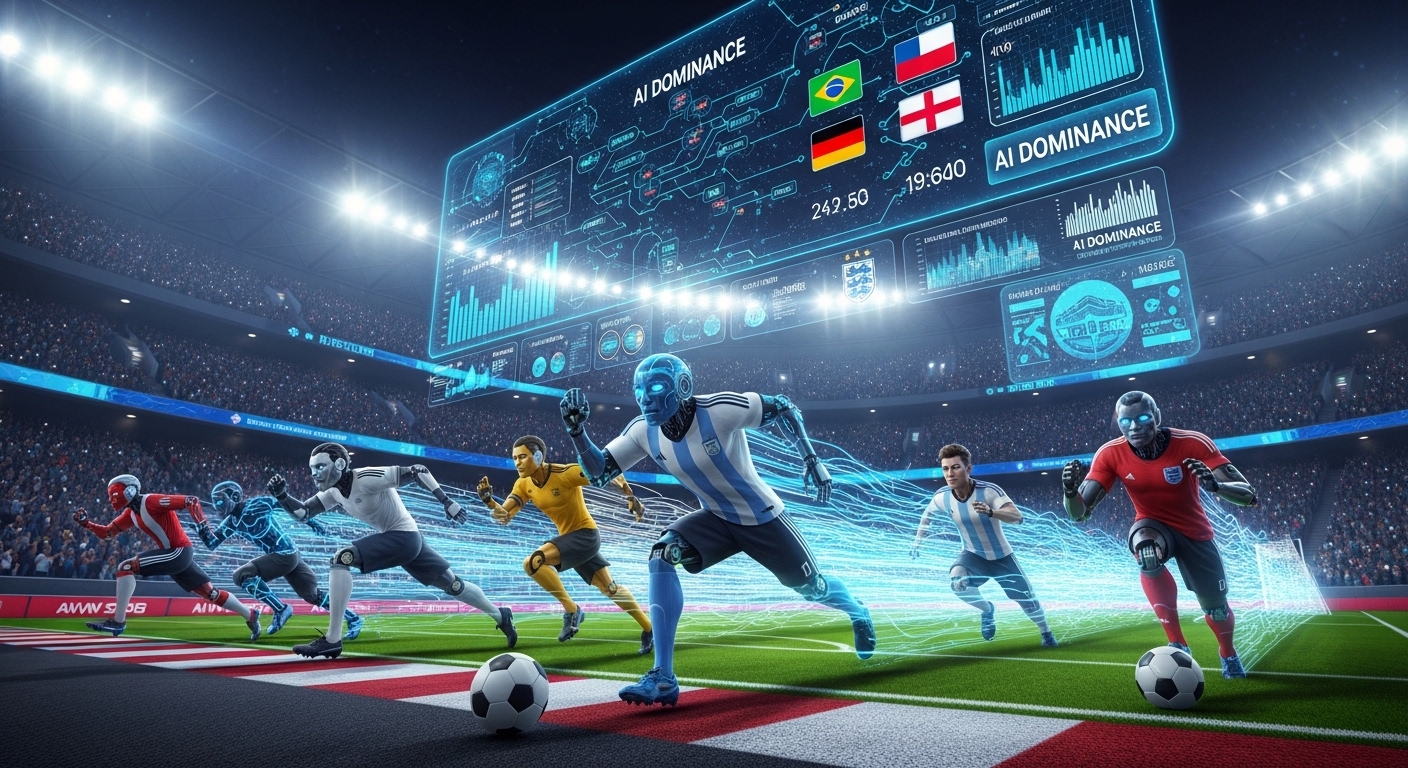
Football, often called the world’s most popular sport, has always been about skill, passion, and strategy. But a new player has entered the field: artificial intelligence. It’s no longer just about the talent on the pitch; it’s about the intelligence behind the tactics. Indeed, World Cup Teams Are in a Race for AI Dominance, a competition unfolding quietly off the field, yet profoundly impacting what happens during matches.
For years, data analysis meant statisticians tracking passes and shots. Now, AI takes this to an entirely new level. It crunches vast amounts of information – player movements, historical game data, opponent tendencies, even weather – to find patterns and predict outcomes. This isn’t just about winning; it’s about gaining every conceivable advantage. Every sprint, every tackle, every precise pass can be analyzed for optimal performance, offering insights the human eye might miss.
Secure your business and remote users
Get an All-In-One security stack, reduce lateral movement, and monitor every endpoint, fully managed for you. For just $1 per day.
Book a Meeting NowThe AI Advantage: Beyond Human Eyes
What exactly does AI bring to a World Cup team? Quite a lot. It helps coaches create custom training regimens, identify opposition weaknesses, and even predict player fatigue. Imagine knowing, with high certainty, which substitute will have the greatest impact in the final minutes. That’s the power AI offers.
Coaches use AI models to simulate game scenarios. They test different tactical approaches against virtual opponents, seeing how strategies play out before ever stepping onto the real pitch. This allows for meticulous preparation and refinement of game plans based on data-driven insights, moving beyond mere gut feelings. It’s a significant shift.
FIFA’s AI Agent: A Level Playing Field?
Recognizing AI’s growing importance, FIFA now provides an AI agent that any participating team can use. This tool offers basic analytical capabilities, aiming to give all teams, regardless of budget, a baseline understanding of AI’s potential. It’s a good start. But here’s the thing: basic tools only go so far when others use advanced, custom-built systems.
While FIFA’s initiative is commendable, it highlights a looming question: will future World Cup winners be determined by which team can afford the best, most sophisticated AI? This isn’t just about software; it’s about dedicated data scientists, computational power, and proprietary algorithms. In this arena, it appears World Cup Teams Are in a Race for AI Dominance, and some teams have a significant head start.
The Cost of Cutting-Edge AI
Top-tier AI solutions are expensive. Building and maintaining these systems requires substantial investment. Teams from nations with deeper pockets hire specialized AI firms, develop bespoke platforms, and integrate advanced machine learning models into every operation, from scouting new talent to in-game decision-making. These customized systems offer predictive insights far beyond what a general-purpose tool can provide. This is why World Cup Teams Are in a Race for AI Dominance, leveraging every financial and technological advantage.
This creates a potential disparity. A national team with a smaller budget might rely solely on FIFA’s tool, while a wealthier counterpart runs multiple parallel AI systems, gaining a nuanced understanding of every player and opponent. It’s similar to access to the best training facilities. The playing field, despite FIFA’s efforts, isn’t always level.
Beyond Strategy: Player Development and Well-being
AI’s impact isn’t limited to tactics. It plays a significant role in player development and well-being. Performance tracking and AI algorithms monitor player health, workload, and recovery times with incredible precision. This helps medical staff tailor individual training, minimize injury risks, and optimize rehabilitation. A player’s career can literally be extended through AI-driven insights.
Moreover, AI helps scout new talent more effectively. It can analyze countless youth league games, flagging players with specific attributes and growth potential that might otherwise go unnoticed. This widens the talent pool and gives teams a competitive advantage in securing future stars. AI can process the vast data from thousands of young athletes, looking for the next superstar.
Data Security and the Game’s Evolution
With all this data, security is paramount. Player health records, tactical strategies, and proprietary algorithms are highly sensitive. Protecting this information from cyber threats is crucial. Just as companies need robust security service to guard digital assets, World Cup teams must ensure their AI systems and data are impenetrable. A data breach could compromise an entire campaign.
The increasing sophistication of AI models, like those discussed in relation to OpenAI’s GPT models, suggests a future where these tools are even more powerful. What does this mean for the sport? Will it become too predictable? Will the “beautiful randomness” of football be reduced by algorithms? These are questions needing addressing as technology progresses.
Will Human Intuition Still Matter?
While AI provides unparalleled data, the human element remains vital. The sudden flash of individual brilliance, the on-the-spot decision under pressure, or the inspiring half-time talk – these moments define football. AI is a tool, a powerful one, but it’s not a replacement for human intuition, creativity, and leadership. It augments, it informs, but it doesn’t entirely dictate.
Conclusion: The Race Continues
The strategic incorporation of artificial intelligence in football is undeniable. From scouting to strategy, and player health to in-game adjustments, AI offers a competitive edge teams can no longer ignore. It’s clear that World Cup Teams Are in a Race for AI Dominance, and this race is shaping the sport’s future. While FIFA’s efforts to democratize AI access are a step in the right direction, financial disparity in adopting advanced systems suggests the gap might widen. The beautiful game is still beautiful, but it’s also getting a lot smarter.