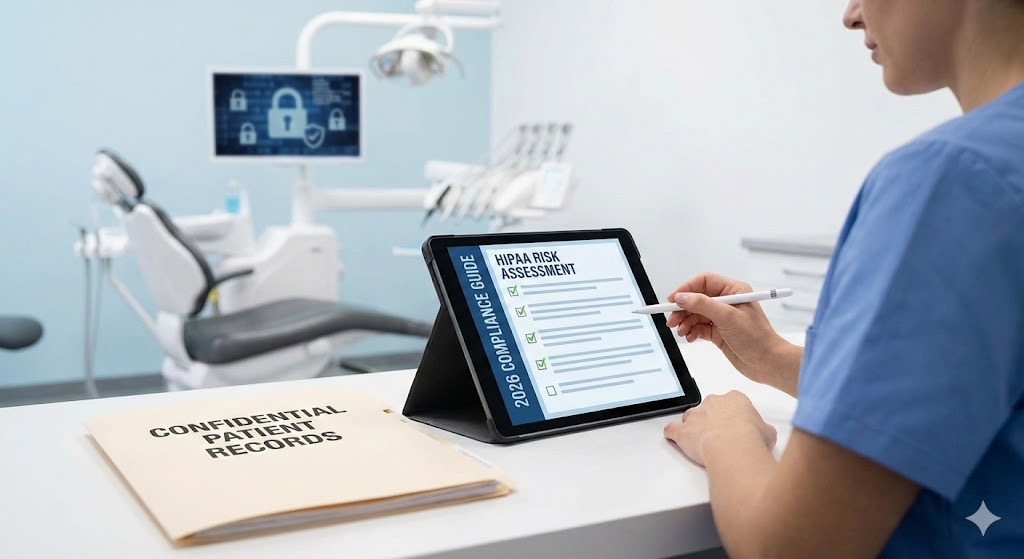
Healthcare Cybersecurity • 2025 Review
2025 Healthcare Cybersecurity: Breaches, Threats, and Advanced Defensive Strategies
Updated: • Reading time: ~12–15 minutes
Bottom line: Healthcare remains a high-value target because the data is monetizable, downtime is intolerable, and vendor/device sprawl creates weak links. The winning programs in 2025 are not “tool stacks,” they are disciplined basics: identity hardening, segmentation, patching, monitored endpoints, tested recovery, and vendor governance.
Secure your business and remote users
Deploy the SecureTrust stack, reduce lateral movement, and monitor every endpoint, fully managed for you.
Book a Meeting Now1) The 2025 breach landscape: what changed, what stayed the same
The fastest way to cut through noise is to anchor on primary sources. For U.S. healthcare, the most defensible public baseline is the HHS OCR Breach Portal, which lists breaches of unsecured protected health information affecting 500+ individuals and reported within the last 24 months. Treat it as your reality check when anyone claims “record levels.” (HHS OCR Breach Portal)
Two practical observations have consistently held in 2025:
- Operational disruption is the real injury. Patient care impact and revenue interruption usually dwarf pure notification costs.
- Supply chain remains a force multiplier. One compromised vendor can expose many covered entities and business associates.
Accuracy note (important): Many people still refer to the Change Healthcare ransomware event as a “2025 breach.” The incident occurred earlier, but it continued to drive regulatory and operational fallout. HHS confirms Change Healthcare filed a breach report with OCR on July 19, 2024. (HHS Change Healthcare FAQ)
Cost reality: expect the U.S. to be expensive
Global averages can be misleading for U.S. healthcare. IBM’s 2025 Cost of a Data Breach work highlights how breach costs vary by region and governance maturity, and it explicitly calls out AI governance gaps as a growing driver of loss. (IBM Cost of a Data Breach Report 2025)
2) How breaches occur in healthcare: the attack vectors that matter
The patterns are not mysterious. The issue is execution. These are the vectors that repeatedly produce real-world incidents:
Ransomware and extortion (still the headline risk)
- Initial access: credential theft, exposed remote services, unpatched edge systems, vendor access paths.
- Blast radius: flat networks + shared admin creds + weak segmentation.
- Business impact: downtime, diversion, delayed care, claims/payment disruption, reputational damage.
If you need a healthcare-specific response guide, CISA published a ransomware guide tailored for healthcare delivery organizations. (CISA Ransomware Guide for Healthcare)
Phishing and social engineering (still the easiest win for attackers)
- Why it works: time pressure, clinical urgency, and high email volume.
- What’s different now: more convincing lures and faster iteration, including AI-assisted content generation.
- What reduces success rates: continuous training + simulations + hardened email authentication controls.
Benchmarking data from security-awareness vendors continues to show significant reduction in click rates when training is continuous and measured over time. (Example: KnowBe4’s 2025 benchmarking release.) (KnowBe4 2025 Benchmarking Release)
Third-party and supply chain compromise
- Common gap: BAAs exist, but security requirements are vague or unenforced.
- Common failure mode: vendor remote access is not segmented, not monitored, and not least-privilege.
- Minimum bar: enforce MFA, log vendor actions, time-bound access, and contractual incident notification windows.
Unpatched vulnerabilities and misconfiguration
- Healthcare constraint: clinical uptime + legacy systems create patch lag.
- Answer: compensate with segmentation, virtual patching, application allowlisting, and monitored EDR.
3) Emerging threats to treat as immediate, not theoretical
AI-powered attacks and governance gaps
- Offense: faster phishing, better impersonation, deeper pretexting.
- Defense gap: “shadow AI” adoption without access controls, DLP, logging, or vendor review.
- Control objective: inventory AI use, gate ePHI, and enforce approved tooling with audit trails.
IBM’s 2025 report explicitly highlights AI oversight issues as a growing cost and risk factor. (IBM Cost of a Data Breach Report 2025)
Internet of Medical Things (IoMT): patient safety meets cyber
IoMT risk is not just confidentiality. It is clinical integrity and availability. FDA’s medical device cybersecurity guidance is a practical reference point for how manufacturers and providers should think about secure design and lifecycle resilience. (FDA Medical Device Cybersecurity Guidance)
Cloud exposures: shared responsibility misunderstandings
- Typical incident: storage misconfiguration, over-permissive IAM, exposed APIs, leaked keys.
- Control objective: enforce least privilege, conditional access, centralized logging, and continuous config monitoring.
4) Defensive playbook: controls that materially reduce risk
Implement Zero Trust where it counts
- MFA everywhere: no exceptions for remote access, admin consoles, email, EHR admin, and vendor access.
- Least privilege by default: remove standing admin rights, use just-in-time elevation.
- Segment critical assets: EHR, imaging, pharmacy, OT/biomed, and backups should not be on flat networks.
- Continuous verification: device posture + identity risk + conditional access.
Harden email as a frontline control
- Enforce SPF/DKIM/DMARC: reduce domain spoofing and impersonation risk.
- Sandbox links and attachments: detonate before delivery when feasible.
- Disable legacy auth: remove protocol paths that bypass MFA.
Ransomware resilience: prevention is good, recovery is mandatory
Minimum ransomware readiness checklist:
- Immutable backups + offline/segmented backup administration
- Quarterly restore tests (prove RTO/RPO with evidence)
- EDR everywhere + isolation playbooks
- Local admin password management (unique per endpoint)
- Kill lateral movement (SMB hardening, segmentation, admin tiering)
- Documented “downtime mode” workflows for clinical operations
For additional sector-specific guidance, CISA’s StopRansomware healthcare sector resources consolidate advisories and mitigation pointers. (CISA Healthcare & Public Health StopRansomware)
Third-party risk management that actually reduces exposure
- Pre-contract: require security attestations (SOC 2/HITRUST where relevant), incident history, and encryption posture.
- Contract language: BAAs with explicit controls, breach notification timelines, audit rights, and subcontractor flow-downs.
- Access control: vendor access must be MFA + least privilege + time-bound + logged.
- Continuous monitoring: re-assess on cadence, and trigger reviews after vendor changes or incidents.
Medical device security management (practical version)
- Inventory: know what you have, where it is, and what software it runs.
- Network isolation: biomed networks are not “general LAN.”
- Vuln process: track advisories, coordinate with manufacturers, apply compensating controls when patching is constrained.
- Procurement: require a vulnerability disclosure program and lifecycle update commitments.
5) HIPAA, NIST, and governance that survives audits
Stop treating risk analysis as paperwork
Most regulatory pain comes from a simple failure: incomplete risk analysis, and no evidence that identified risks were actually reduced. If you want a control-structured resource for implementing HIPAA Security Rule safeguards, use NIST SP 800-66 Rev. 2. (NIST SP 800-66 Rev. 2)
Use sector guidance designed for healthcare
HHS’s 405(d) program maintains the Health Industry Cybersecurity Practices (HICP) resources that map common healthcare threats to concrete mitigations and is widely used for practical alignment. (HHS 405(d) HICP)
Threat intel sharing: reduce time-to-know
Healthcare organizations that participate in sector information sharing typically shorten detection and response cycles because they learn faster from peer indicators and tactics. Health-ISAC is the primary health sector ISAC for this purpose. (About Health-ISAC)
6) 30–90 day action plan (no fluff)
Days 0–30: reduce the highest-probability breach paths
- Turn on MFA everywhere, eliminate legacy auth, enforce conditional access.
- Lock down vendor access: MFA, least privilege, time-bound access, logging.
- Segment backups and restrict backup admin paths.
- Deploy or validate EDR coverage and isolation capability.
- Implement DMARC enforcement for your domain (and monitor failures).
Days 31–60: prove you can recover
- Run a ransomware tabletop that includes clinical downtime workflows.
- Perform a full restore test for at least one critical system, document evidence.
- Implement admin tiering and remove standing admin rights.
- Establish baseline logging: identity, email, endpoints, critical servers, cloud control plane.
Days 61–90: operationalize governance
- Complete a HIPAA-aligned risk analysis with tracked remediation work.
- Formalize third-party risk workflow, minimum security requirements, and re-assessment cadence.
- Build a living asset inventory for servers, endpoints, and IoMT.
- Join or engage a sector sharing group (where appropriate) for timely intel.
FAQ
Where do I verify current large healthcare breaches?
Use the HHS OCR Breach Portal (500+ individuals, last 24 months). It is the cleanest public baseline for U.S. reporting. View the OCR Breach Portal
What’s the single most effective ransomware control?
There is no single control. The fastest risk reduction comes from MFA + segmentation + immutable, tested backups. If you cannot restore quickly, you are negotiating from weakness.
What’s the best HIPAA implementation guidance that maps to security controls?
NIST SP 800-66 Rev. 2 is a strong reference for implementing HIPAA Security Rule safeguards in a structured, control-oriented way. Read NIST SP 800-66 Rev. 2
References
- HHS OCR Breach Portal (500+ individuals): ocrportal.hhs.gov
- IBM Cost of a Data Breach Report 2025: ibm.com
- HHS Change Healthcare incident FAQ (breach report filed July 19, 2024): hhs.gov
- NIST SP 800-66 Rev. 2: csrc.nist.gov
- HHS 405(d) HICP resources: 405d.hhs.gov
- CISA ransomware guide for healthcare: cisa.gov (PDF)
- CISA healthcare sector ransomware resources: cisa.gov
- FDA medical device cybersecurity guidance: fda.gov
- Health-ISAC (sector information sharing): health-isac.org
- KnowBe4 benchmarking press release (training impact metric): knowbe4.com
Contact us:
If you want a defensible, audit-ready security program that reduces breach likelihood and shortens downtime, build around identity hardening, segmentation, monitored endpoints, tested recovery, and vendor governance. If you need help, publish your requirements, scope your risk analysis, and execute a 90-day hardening sprint.